• BIM 4D Services

    BIM Services offers BIM 4D modeling for building construction planning and create Building Information Models in 4D .. Read more
  • BIM 4D Modeling Services

    BIM 4D Services Company is a leading Revit BIM Services offers low costs and accurate Pre-Construction BIM Modeling Services for Building construction models. .. Read more
  • BIM Consulting Services

    BIM 4D Services Company offers a full range of Revit BIM 3D, 4D, 5D, 6D & 7D modeling services at low rates .. Read more

BIM for Roads and Highways, transforming the equation between Architects and Engineers

A recent report suggests that BIM – building information market is expected to grow at a CAGR of 21.6% from 2016 to 2022. Although, Building Information Modelling (BIM) has its roots in architecture, it’s a collective myth amongst design and construction professionals. They assume that BIM advantages, as delivered by BIM Outsourcing Company, are meant only for architects and are significant only to building design and construction. 

Actually, BIM is applicable to anything that needs construction, which also includes civil and infrastructure projects including roads, highways, tunnels and much more. As a matter of fact, according to McGraw Hill’s report, Business Value of BIM, civil engineers are embracing BIM software faster as compared to architects in the initial days. End-result being the common goal for architects and engineers, they opt for methods and standards of their own, which is a matter of concern. Let’s take a look at the specific benefits that BIM provides from a civil and infrastructure engineering standpoint and in what ways it transforms the equation between an Architect and an Engineer.

BIM helps in deriving current ground condition for civil work, using a variety of inputs such as GIS data, underground radar, laser scanning to develop reliable model of existing civil condition etc.  This model is than used to simulate the impact of the proposed design solutions, engaging community stakeholders and visualization for development. Construction documentation and design phases of the project are the crucial aspect for infrastructure projects, where BIM has been profoundly helpful. Also, spatial coordination and structural analysis are amongst the most commonly used applications of BIM, across phases of infrastructure projects including Rail, Bridges & Dams, Tunnels, and Ports etc. 

Building Information Modeling workflows with AutoCAD Civil 3D

BIM permits engineers to conveniently predict the performance of projects, prior to actual construction. It improves designs with precise analysis; foresee design variations at designated time, mock-ups, and offer greater quality of documentation. Furthermore, it authorizes comprehensive groups to extract valuable data from the model to aid into earlier decision making and further worthwhile project delivery. We tend to associate BIM with 3D visualization, but its way more than that. BIM crafts a body of information that can be used from commencement to decommissioning. 

Use of documentation software to support BIM workflows and AutoCAD Civil 3D for civil engineering designs is to accelerate project delivery, preserve more consistent data and respond more rapidly to discrepancy.  

AutoCAD Civil 3D software is the BIM solution structured for civil engineers, technicians’ drafters, architectural designers, and structural engineers working on transportation as well as water and land development projects, all in all the supply chain stakeholders. It provides extensive industry resolutions for both, CAD workflows and BIM workflows, in one cost-effective and flexible package.

InfraWorks 360 aids Highway Engineering Professionals generate data-rich models and engineer highways in context. It streamlines roadway geometry plan comprising of intersection design, with authoritative, rules-specified toolsets and analytic capabilities to help expose potential effects in the initial design phase.

The BIM course and its design models are the sole truth of design for planners, engineers, contractors, fabricators, and commercial and operational managers. It assists optimization of the design pertaining to function, time, and cost; and by virtually constructing the infrastructure; coordination is attained off-site. The construction sequence is streamlined. 

Better Construction Project Execution in the field is one of the ways in which model-based design and a BIM process in the office is having a big impact in the field and construction execution through GPS machine control. It has started transforming the Infrastructure construction in several parts across the globe, and will endure to do so in other countries too by making it feasible and convenient for Contractors to finish projects sooner, within budget, and with great accuracy. 

In fact, using GPS device control technology with Laser leveling and a Model, Contractors can match a design engineer's specifications within millimeters in the straight position and centimeters in perpendicular position and help with: 

Time savings: Building squads can operate 24/7 without having to postpone staking, cut sheets, and crews.

Safety: No one is in harm's way while the machineries are operating, as you don’t require anyone to grade stakes. 

Cost savings: Engineers save time throughout the modeling course, and contractors save time in the workplace and in the field. 

Green design: More effectual maneuver, results in compact material usage and waste, lower fuel costs, and more precise outcomes.

Accuracy: Starting from, design model to field, teams can greatly reduce interpretation/interpolation errors and costly rework. 

Construction sequencing: Users are competent to sequence construction, equipment, and materials and track progress contrary to logistics and timelines determined in the office by use of laser scanning for up-to-date as-built.

The eventual aid of 3D engineered models, offered by professional architectural cad drafting services, range beyond design and construction to the whole infrastructure life cycle, comprising of Maintenance, Operations, Asset management, and Planning for upcoming projects. After the 3D model is put up, it can be used for eternity, for managing roadway infrastructure and related rudiments such as lighting, signage, drainage, and structure maintenance.
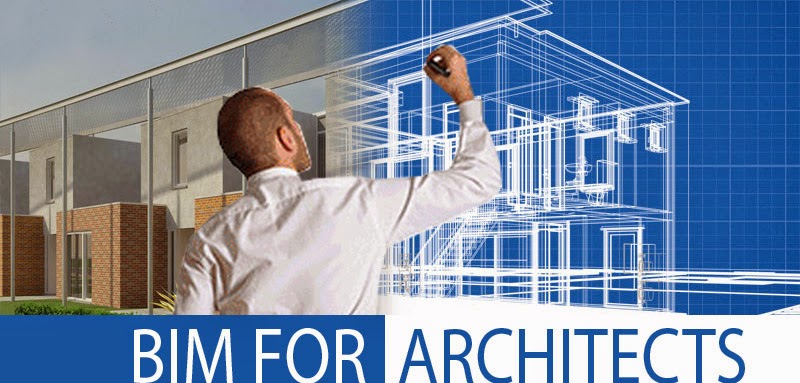
BIM Wave Set to Change the Way Architects and Engineers Operate

BIM is a global phenomenon, and it is set to change the way architects work. In a survey sometime in 2014, it was revealed that 95% construction professionals were aware of BIM and it was predicted that BIM adoption and its usage would jump from mere 54% to a whooping figure of 93% in a time gap of three years.


Today, the scenario is such that, Dubai has already made BIM use mandatory for all large scale and complex building projects. Singapore has made it mandatory for projects bigger that 5000 square meters to use BIM. 

UK firms are also gearing up for adoption of level 2 BIM capabilities for all central government infrastructure projects from 2016, and France is preparing for a major shift by mandating BIM use for public procurement since 2017.
 
BIM for architects and engineers is a trend that cannot be ignored. The increased awareness of BIM benefits can only expedite the BIM adoption across all stages of the building lifecycle, and contractors will also insist that their supply chains use building information modeling too.  

The reasons why it is the best policy for architects and engineers to proactively embrace BIM are aplenty. 
  1. Going 3D, is better than 2D for spatial management 
  2. It is easy to create visualizations and communicate design and construction planning to concerned people 
  3. It is easy to analyze energy performance 
  4. Information rich 3D models can be shared across structural and MEP disciplines to enable engineers communicate design information in a better manner 
  5. As the design and construction process becomes efficient, it helps architects gain an edge over competition 
Often architects are adamant reluctant to adopt BIM, due to lack of expertise. However outsourcing BIM solutions can be the best way out. BIM adoption can hence be of great business value for architects with small or medium sized practices.

Importance of BIM for Building Owners and Developers

How important it would be to you if all design documents, ideas, operational details, functional characteristics, pertaining to a construction project is kept intact in a centralized information source?


How About If There Isn’t Any Hassle of Spilling out Information or Creating Redundant Data?

With BIM for building owners and developers, creating a comprehensive business model regarding a construction project now becomes easier and hassle-free. With the use of three-dimensional, real time software, you can now create a building model that demonstrates its entire life cycle.

What is Business Information Modeling?

BIM is the process of creating a building model that ideally represents light analysis, geometry, spatial relationships, geographic details, and other properties and components of the building that may be generic, undefined, or oriented to void shapes or solid shapes. The objects are typically consistent in the way of location, size, and specification. In a nutshell, business information modeling typically represents the actual parts and components used in constructing the building. It prevents any loopholes or errors from creeping into the design of the building, thus, eliminating uncertainties in the construction process. BIM on projects is regularly updated to provide a more comprehensive and accurate view of the building.

How Does Building Information Management Help Developers and Owners?

BIM for building owners and developers has brought a revolution in the construction architecture, changing the traditional methods that used computer aided drafting procedures for drawing and designing. Simultaneously, enhanced data sharing capabilities have also been added than before.

Discussed Herewith is How Building Owners and Developers can Leverage BIM:


Gives a complete snapshot of the project: BIM on projects provides the engineers, designers, stakeholders, and managers a comprehensive view of the entire construction project. This enables every individual related to the project to have reliable and accurate information that can be easily tracked for project assessment, coordination, communication, cost estimation, and progress. 

Provides important documents: While construction designs are often substantiated with a wide range of documents such as 3D or 2D drawings, they typically lack other relevant information such as bills of purchase, agreement details, bids, schedules, government and building specifications, etc. In such a scenario, BIM for building owners and developers has the capability to fill up the information gap to provide complete coordination. It also provides an improved version over 2D drafting, giving an angle view of the building, which helps in identifying and rectifying the errors well in advance.
 
Reduces cost and Enhances Productivity: BIM is the single source of valuable information pertaining to the construction project. Hence, it improves overall communication and operational efficiency. This helps in minimizing approval and cross referencing time during the construction phase that leads to better productivity and quality of work. This, in turn, helps in reducing the project construction cost and time.

BIM on projects also helps in reducing reworks by identifying and rectifying the design loopholes and error well in advance of construction. It also improves coordination and enhances customer satisfaction with transparency and consistency in the project, speed of work, and quality.

BIM Revit Family Creation for Components across MEP, Architectural and Structural Disciplines

"Revit Family creation for BIM, allows experts to build native families ‘these families include development of components across MEP, architectural and structural disciplines’, which are essential for a project to run seamlessly."

The structural elements include rebar, columns, beams and other similar equipments, while the Architectural elements include families for doors, windows, furniture, walls, stairs etc.


A Revit 3D BIM is created using these Revit family creations for BIM, and each family is categorized into elements that have similar size, material type and other parametric variables. Any change to a family type results in instant change across all the elements of that family.

Revit software contains predefined families, and users can also create custom families with specific properties and parameters as desired to suite project purpose. This process helps create a centralized building data management system, which in turn helps improve the quality of BIM.


Revit Family Creation Can Be Bifurcated Into Three Primary Categories:

System Families: These are used for creating building basic structural elements like walls, ceilings, floors, columns, stairs etc. these families are defined in Revit architecture and cannot be loaded in projects from external files, and neither can these families be used outside the project outlines.
 

Loadable Families: Loadable families are created for architectural elements like doors, windows, fixtures, furniture etc. These files can be created in .rfa files and then loaded into your project at any time when required.
 

In Place Families: This includes creation of specific and unique BIM elements for an AEC project. When an in place element is used, a new families created in Revit for that particular element. Multiple type creation for this element is not possible; however, the same element can be used across the projects at various instances.

Revit families for BIM can be created from scratch by feeding all the requisite details, an existing family can also be modified and customized as per requirement – for this experts might import a template for say doors, and then modify the specification as per the project requisites;besides, ready made families can be used right away if the requirements are basic and can be fulfilled by existing Revit family.
 

Creating Advanced Families in Revit, helps develop a high quality BIM. Such type of family creation not only speeds up the project coordination and management process but also increases project efficiency and helps cut down the project costs.

BIM 4D Services offers a comprehensive range of Revit family creation services for BIM to its global clientele across the countries of US, UK, Canada, Australia and UAE. The companies wide range of project expertise includes family creation for structural and architectural components, custom and specialty content, MEP components, Legends and title blocks etc to name a few.

Leveraging BIM Capabilities for Facility Management

BIM- i.e. building information modeling is an effective tool that has brought in a revolution in the way building and construction projects are handled and executed. However, the capabilities of BIM are not limited to just the construction process. BIM capabilities can be leveraged way beyond the design and construction of a building and used for effective operations and maintenance of a facility after it is occupied.
 

(Image Source: http://scenista.com)

There are several dimensions of BIM where 4D BIM refers to construction and scheduling, 5D refers to cost estimation, the 6th dimension is that of design for sustainability while the 7th dimension to BIM is its ability to contribute and aid facility management in an efficient manner.

Maintaining Records For As Built Model in BIM

Buildings undergo a range of changes from the stage of design right through all the stages of a buildings life cycle. All these changes should be updated in a BIM model to facilitate management of a building once it is occupied. Besides any repair or renovation done to suite the changing spatial requirements should also be updated in a BIM model so that any other renovation and refurbishment work in future can be carried out with these changes in consideration.


How does BIM Support Facility Management?
  1. BIM is loaded with all spatial information of a building. As a result, it doubles up as a building documentation file, with an added advantage of easy to understand visual information.

  2. An effective maintenance plan can be prepared by integrating BIM with computer aided maintenance management system. Hence, an improvised operation and maintenance tracking tool can be created.

  3. The ‘I’ in BIM is of crucial importance and facility managers can use it to define energy efficiency goals and also achieve them.

  4. BIM is specially very handy and useful to facility managers when they undertake any kind of repair or renovation work. BIM has all the MEP and structural information stored into it. Hence, repair work becomes easy and risk free.

The growing use of BIM across the AEC industry has armed the facility managers to handle the operations and maintenance of a facility with utmost efficiency.

Hi-Tech CADD Services offers a full range of BIM services to its clients mainly from US, UK, Australia and UAE. The team of BIM experts at the company is experienced in translating 2D drafts into information rich BI models that support efficient facility management.

BIM Engineering Services: Reducing Rework Models

The primary function of BIM Engineering Services is based upon developing accurate building information modeling designs for framework, and mechanical/electrical/plumbing and flame security techniques.


These can be designed at key levels of style to generate preliminary designs for construct ability research, co-ordination reviews and quantification, development designs for detail and development designs to back up the development of store sketches.

We Offer BIM Engineering Services Includes:

     1.  Clash Recognition and Design Validation
     2.  Rebar Detailing
     3.  Construct ability Analysis – Construction Method Statement
     4.  2D Common Agreement (GA) Drawings
     5.  Quantity Take-Off And Price Estimates
     6.  4D (Time) - Construction Simulation
     7.  5D (Cost) - Cash Circulation Simulation

BIM Engineering Services improves performance and customers will get several advantages.

The clients will recognize some of the biggest value of BIM through its prospective, to cut down on remodel, such as re-keying details into designs or creating changes in the area. As customers become more efficient, the possibilities to enhance performance are more pronounced.

Nearly 50 percent of all customers identified, that architectural technicians can produce an advanced level of value from Engineering BIM Services. Such components as metal content, supports and trusses are frequently patterned by customers. Companies are the most likely (47%) to see architectural technicians recognizing important benefits.

As BIM Engineering Services decreases disputes and makes assurance in building plans, many associates see possibilities for value in production. Precise production of components decreases spend while the pre-assembly cannot spend time. Companies (56%) are far more likely to see fabricators suffering from a higher value than designers (23%), technicians (38%) or owners (30%).

The Advantages of Using BIM Engineering Services Are:

     1.  Decreases Remodel
     2.  Improves Productivity
     3.  Reduces Disputes and Changes during Development
     4.  Clash Recognition and Preventing Rework

There are a range of possibilities for MEP technicians to use BIM. Modelling bigger components such as ducts and air handlers are friendly options, while small components such as electrical changes and sites might confirm more complicated.

Especially, very few technicians (22%) collectively see MEP technicians enjoying great value. Nearly 50 percent of contractors (45%) believe MEP technicians see important value.

How Airflow and Ventilation BIM Modeling is Effective in Sustainability Design?

Creating sustainability design is the trend today. With the focus towards sustainable development and energy conservation, more importance is attributed towards creating design for a building that is energy-efficient, sustainability built, and fosters environment development.

To make sustainability design more effective, it is important to consider integral components of the building such as airflow and ventilation.

However, with traditional drafting procedures, it is difficult to get a comprehensive view of building’s airflow and ventilation in an accurate and efficient manner.

Airflow and Ventilation BIM Modeling

This is Where Building Information Management (BIM) Aids in Creating a Sustainable Design, Focused Towards Energy Conservation.

Airflow and ventilation are two important factors that help in determining how construction of the building would impact wind flow into and outside. BIM modeling for airflow and ventilation gives a comprehensive detail of building’s impact on wind flow, with detailed view from front, top, and bottom.

The models are created based on client’s design specifications and modifying the same to keep sufficient space for airflow and ventilation. At the same time, it is ensured that no component of the building causes hindrance in airflow. All the components of airflow and ventilation are specially taken into consideration while creating the design.

BIM modeling for airflow and ventilation helps in analyzing the design in details and identifying the weaknesses if any. It also becomes easier to identify the areas where there is lack of airflow or ventilation, or certain components that are causing a hindrance in wind flow.

Errors in the design can be rectified early, minimizing the need for costly modifications and reworks pot-implementation.